Best spine surgeon in Mumbai | Common Spinal Stenosis: Symptoms, Causes & Treatment | Dr. Sarthak Kadakia
Spinal stenosis is a common spine condition in which the spinal canal narrows, putting pressure on the nerves traveling through the spine. This narrowing can lead to pain, discomfort, numbness, and difficulty with movement if not treated properly.
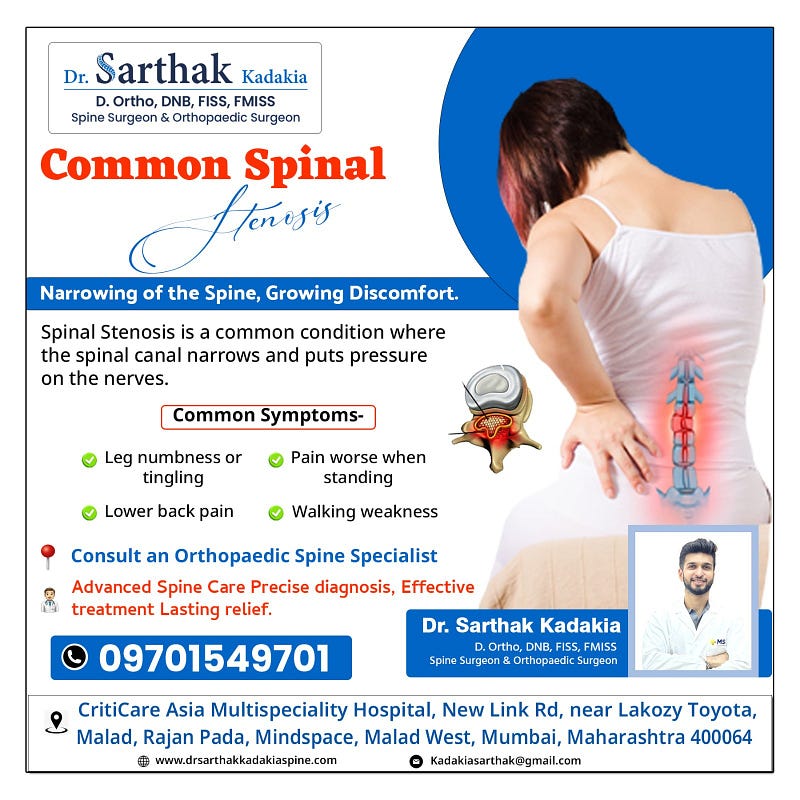
The condition most commonly affects the lower back (lumbar spine) and neck (cervical spine) and is often seen in older adults due to age-related changes in the spine. Early diagnosis and proper medical care can help manage symptoms and improve quality of life.
What is Spinal Stenosis?
Spinal stenosis occurs when the spaces within the spine become narrower. This narrowing places pressure on the spinal cord and nerves, causing pain and neurological symptoms.
The condition can develop gradually and may worsen over time if left untreated. Seeking evaluation from a spine specialist or orthopaedic surgeon is important when symptoms begin to interfere with daily activities.
Common Symptoms of Spinal Stenosis
People experiencing spinal stenosis may notice the following symptoms:
- Leg numbness or tingling
- Lower back pain
- Pain that worsens while standing
- Weakness while walking
- Reduced mobility or discomfort during movement
Symptoms can vary depending on the location and severity of the nerve compression.
Causes and Risk Factors
Several factors can contribute to the development of spinal stenosis, including:
- Age-related spinal degeneration
- Herniated discs
- Thickened ligaments in the spine
- Bone spurs caused by arthritis
- Previous spine injuries or trauma
As people age, the spine naturally undergoes wear and tear, increasing the risk of narrowing in the spinal canal.
Diagnosis of Spinal Stenosis
A spine specialist typically diagnoses spinal stenosis using:
- Physical examination
- Medical history review
- Imaging tests such as MRI, CT scans, or X-rays
These tests help determine the location and severity of the narrowing in the spine.
Treatment Options for Spinal Stenosis
Treatment depends on the severity of symptoms and the patient’s overall health. Common treatment options include:
1. Conservative Treatment
- Physical therapy
- Pain management medications
- Lifestyle modifications
- Activity adjustments
2. Advanced Spine Care
If conservative treatments do not provide relief, advanced spine treatments or surgical procedures may be recommended to relieve nerve pressure and restore mobility.
Proper treatment helps patients achieve long-term relief and improved spinal function.
When to Consult a Spine Specialist
If you experience persistent back pain, numbness in the legs, or weakness while walking, it is important to consult an orthopedic spine specialist for evaluation and treatment.
Early diagnosis can prevent complications and ensure better recovery outcomes.
Contact Details
Dr. Sarthak Kadakia
D. Ortho, DNB, FISS, FMISS
Spine Surgeon & Orthopaedic Surgeon
📍 Hospital Address:
CritiCare Asia Multispeciality Hospital
New Link Rd, near Lakozy Toyota,
Malad, Rajan Pada, Mindspace,
Malad West, Mumbai, Maharashtra — 400064
📞 Phone:
09701549701
🌐 Website:
www.drsarthakkadakiaspine.com
📧 Email:
Kadakiasarthak@gmail.com
Conclusion
Spinal stenosis is a manageable condition when diagnosed early and treated appropriately. Ignoring symptoms such as lower back pain, numbness, or walking weakness may lead to worsening discomfort and reduced mobility.
Consulting a qualified spine specialist ensures accurate diagnosis, effective treatment, and lasting relief, helping patients return to a healthier and more active life.


Comments
Post a Comment